The Complete Mountain Bike Buying Guide: How to Choose Your Perfect Trail Companion
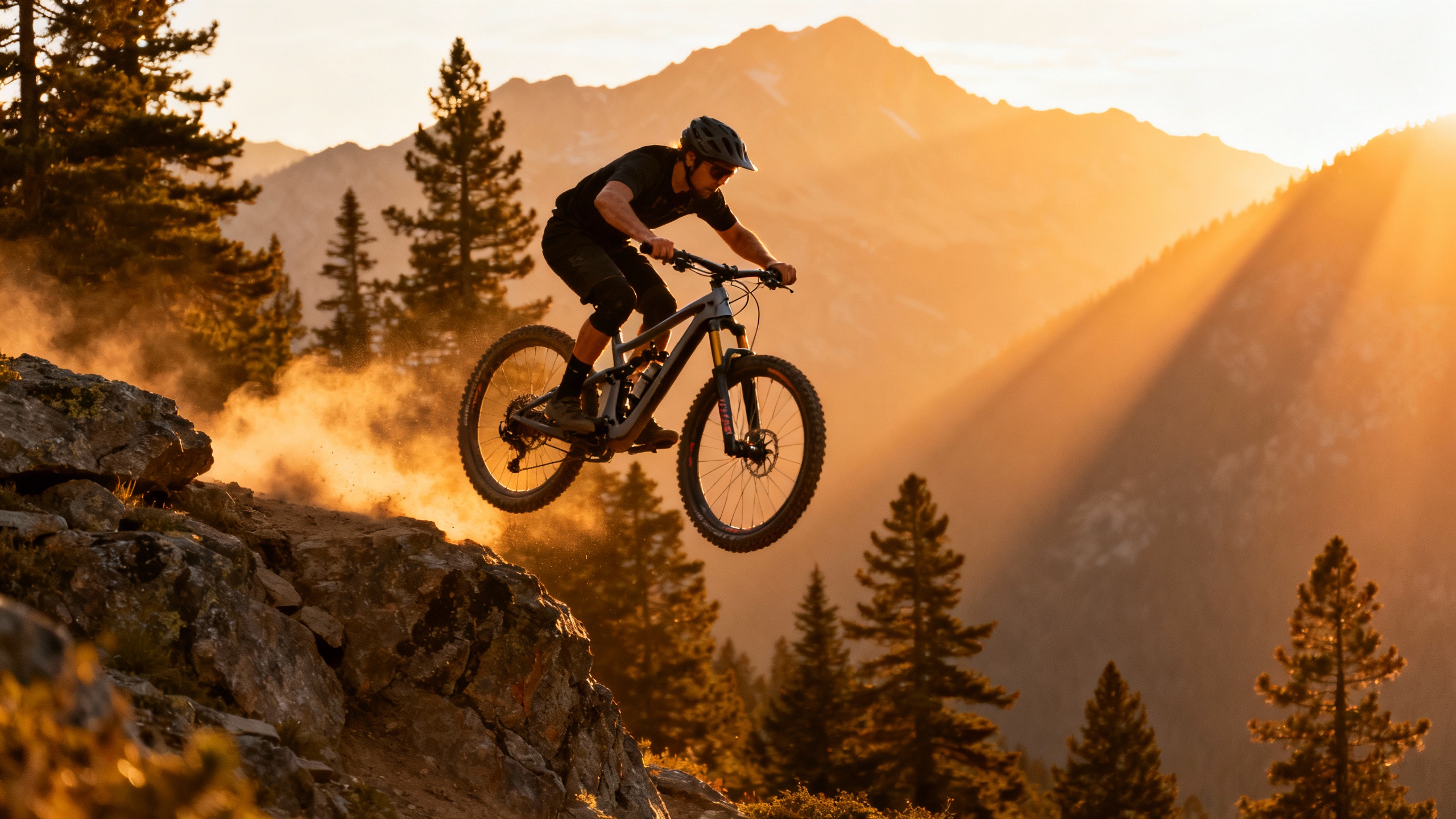
Choosing your first mountain bike or upgrading to something more capable—should be exciting, not overwhelming. Yet walk into any bike shop or browse online, and you’ll face a bewildering array of options: hardtail or full suspension? 27.5-inch or 29-inch wheels? Aluminum or carbon frame? Cross-country or trail geometry?
The mountain bike market has evolved dramatically over the past decade. In 2024, the global mountain bike market was valued at approximately $12.65 billion, reflecting the sport’s surging popularity. With manufacturers constantly pushing boundaries with new suspension technologies, geometry tweaks, and frame materials, the choices have never been more diverse—or more confusing.
This comprehensive guide cuts through the marketing jargon and technical specifications to help you find the mountain bike that genuinely matches your riding style, terrain, and budget. Whether you’re eyeing your first proper off-road machine or considering an upgrade that’ll take your trail riding to the next level, we’ll walk you through every critical decision point.
Understanding Mountain Bike Categories: Which Type Suits Your Riding?
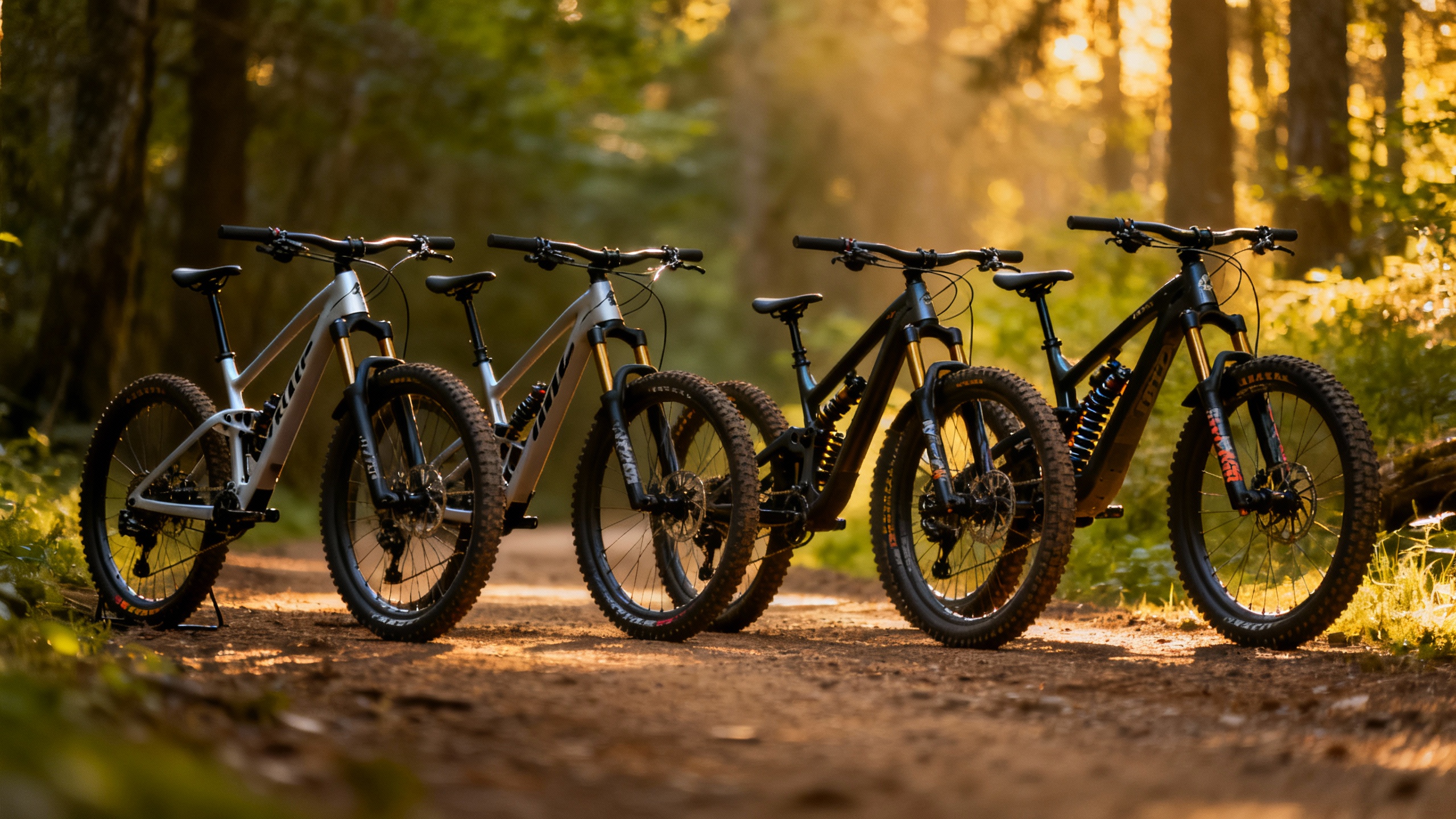
Before diving into frame materials and wheel sizes, you need to answer one fundamental question: what kind of riding do you actually want to do? Mountain bikes aren’t one-size-fits-all machines, and choosing the wrong category can leave you frustrated on the trails.
Cross-Country (XC) Bikes: Built for Speed and Efficiency
Cross-country bikes prioritize pedaling efficiency and lightweight construction over descending prowess. These bikes typically feature 80-120mm of suspension travel, making them the lightest and most efficient climbers in the mountain bike world.
XC bikes excel on smoother singletrack, fire roads, and rolling terrain where maintaining momentum matters more than absorbing massive hits. The geometry tends toward steeper angles—both at the head tube and seat tube—which translates to quick, responsive handling and an efficient climbing position.
However, XC bikes reach their limits quickly on rough, technical descents. The limited suspension travel and race-oriented geometry demand more skill and finesse from the rider. If your local trails feature steep drops, rock gardens, or jump lines, an XC bike might leave you wanting more capability.
Trail Bikes: The Versatile All-Rounders
Trail bikes come with suspension travel ranging from 120 to 160mm, positioning them as the most popular category for good reason. These bikes are designed to handle a bit of everything: they climb efficiently enough for all-day adventures while providing enough capability to tackle demanding descents with confidence.
The best trail mountain bikes balance pedaling efficiency with descending performance through carefully calibrated suspension kinematics and geometry. Modern trail bikes typically feature slacker head angles (around 65-67 degrees), longer reach measurements, and steeper seat angles compared to bikes from even five years ago.
This category offers the widest range of personalities. Some trail bikes lean toward the XC end of the spectrum with shorter travel and lighter builds, while others push toward enduro territory with more aggressive geometry and burlier components. This versatility makes trail bikes ideal for riders who want one bike that can handle most situations.
Enduro Bikes: Gravity-Focused Trail Destroyers
Enduro bikes feature travel ranging from 160 to 190mm, built specifically for aggressive trail riding and enduro racing where descending performance takes priority. These bikes still pedal up mountains—a requirement in enduro racing—but they’re optimized for charging down gnarly terrain at speed.
Expect slack head angles (63-65 degrees), long wheelbases, and progressive suspension designs that provide tremendous support through rough sections. The extra weight and travel do exact a penalty on climbs compared to trail bikes, but the confidence and capability on descents more than compensate for riders tackling challenging terrain.
Downhill Bikes: Purpose-Built Gravity Machines
With 180-200mm+ of travel front and rear, downhill bikes are the heavyweight champions built exclusively for descending. These bikes aren’t designed to be pedaled uphill—they’re meant to be shuttled or lifted to the top, then pointed downward on the gnarliest terrain imaginable.
Unless you have regular access to chairlifts, shuttles, or are serious about downhill racing, a DH bike probably isn’t your first mountain bike.
Hardtail vs Full Suspension: Making the Right Call
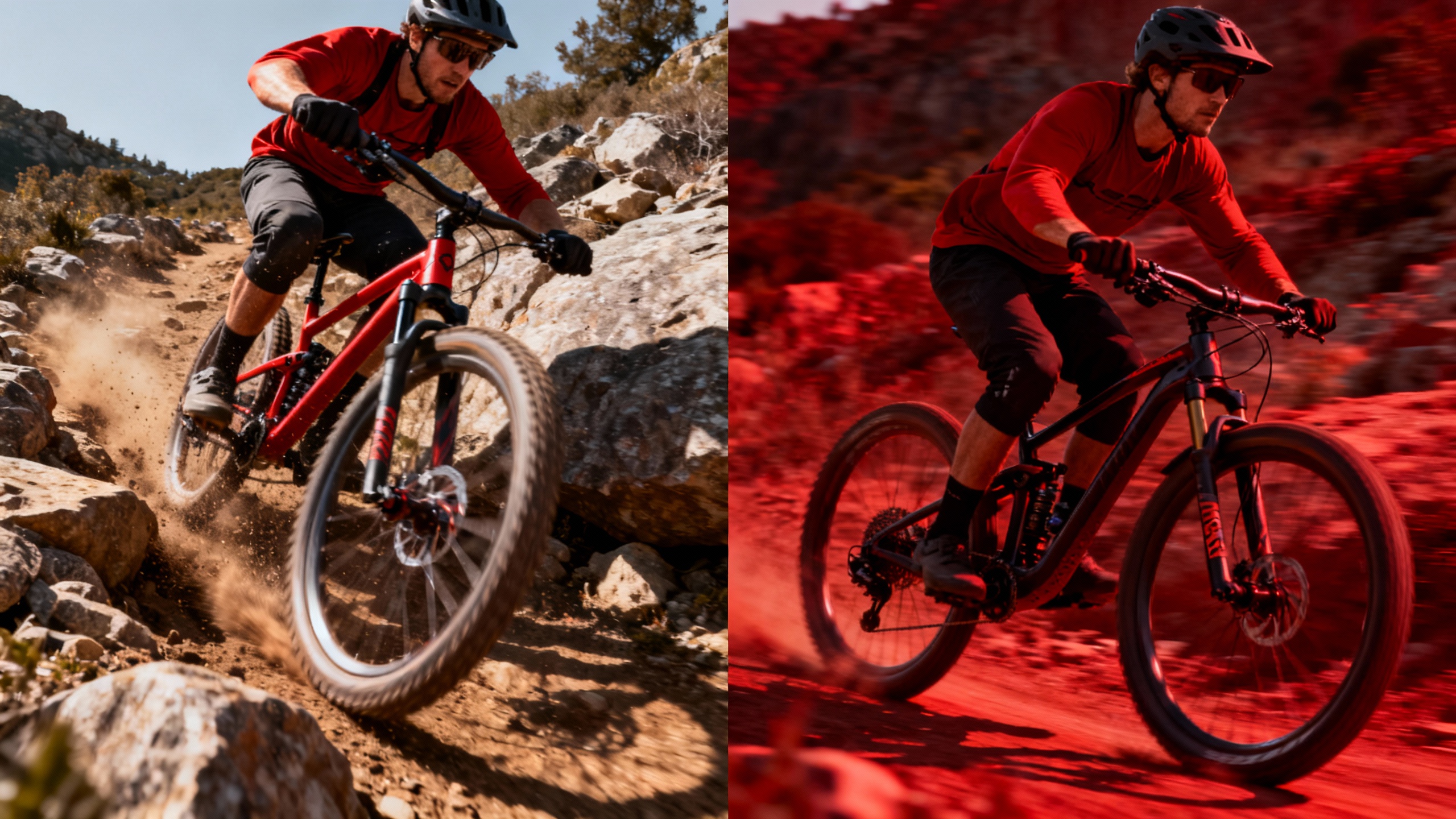
This decision fundamentally shapes your mountain biking experience, affecting everything from ride feel to maintenance requirements to your available budget.
The Case for Hardtails
A hardtail mountain bike features front suspension but no rear shock, relying on frame design, tire pressure, and rider skill to handle trail chatter. This seemingly simple configuration offers several compelling advantages, particularly for newer riders.
Budget Advantage: Dollar for dollar, hardtails deliver significantly better component specifications than full-suspension bikes. A $1,500 hardtail typically features drivetrain, brakes, and fork quality that would require spending $2,500-3,000 on a full-suspension bike.
Skills Development: A hardtail will give you the best platform to learn on because it requires you to be more engaged and in tune with what the trail, the bike, and your body are doing while riding. Without a rear shock to smooth out mistakes, hardtails force you to develop better line choice, body positioning, and bike handling fundamentals.
Maintenance Simplicity: Fewer pivots, no rear shock, and simpler frame construction mean less that can go wrong and lower long-term maintenance costs. For riders on a tight budget or those who prefer spending time riding rather than wrenching, this advantage shouldn’t be overlooked.
Pedaling Efficiency: Hardtails waste almost no energy to suspension bob, making them incredibly efficient on climbs and smooth trails. The direct power transfer from pedals to rear wheel creates a lively, engaging ride feel that many riders prefer.
Modern trail-oriented hardtails blur the lines with their longer-travel forks (often 120-140mm) and progressive geometry borrowed from full-suspension designs. Paired with wider, lower-pressure tires, these bikes can handle surprisingly technical terrain.
The Full-Suspension Advantage
Full-suspension bikes add a rear shock and associated linkage, dramatically changing the riding experience. The benefits become obvious once trails get rough, steep, or technical.
Traction and Control: Rear suspension keeps your tire glued to the ground over roots, rocks, and rough terrain, providing exponentially better traction for both climbing and descending. This translates directly to speed and confidence on technical trails.
Comfort and Fatigue Reduction: Carbon frames have a damping effect, lowering the ride’s harshness. Full suspension multiplies this effect, reducing rider fatigue dramatically on longer rides over rough terrain.
Capability Ceiling: Full suspension opens up terrain that would be punishing or impossible on a hardtail. Rock gardens, root sections, jump lines, and steep technical descents all become more approachable and enjoyable.
Versatility: A properly set-up full-suspension trail bike can handle everything from smooth flow trails to demanding enduro tracks, making it genuinely the only bike you need.
The trade-offs? Full-suspension bikes cost more for equivalent component quality, require more maintenance, and are generally heavier. They’re also more complex to set up properly, with suspension tuning adding another variable beyond basic bike fit.
Making Your Decision
For most first-time mountain bike buyers on a moderate budget ($1,000-2,000), a quality hardtail provides better value and a superior learning platform. You’ll develop better skills, get better components, and save money you can invest in protective gear, a dropper post upgrade, or trail fees.
However, if your local trails are predominantly rough and technical, or if you’re already experienced with mountain biking basics and know you want full-suspension capability, spending more upfront for full suspension makes sense.
Wheel Size Wars: 27.5″, 29″, or Mixed?
Mountain bike wheel sizes have evolved into three distinct camps, each offering genuine advantages for different riding styles and rider sizes.
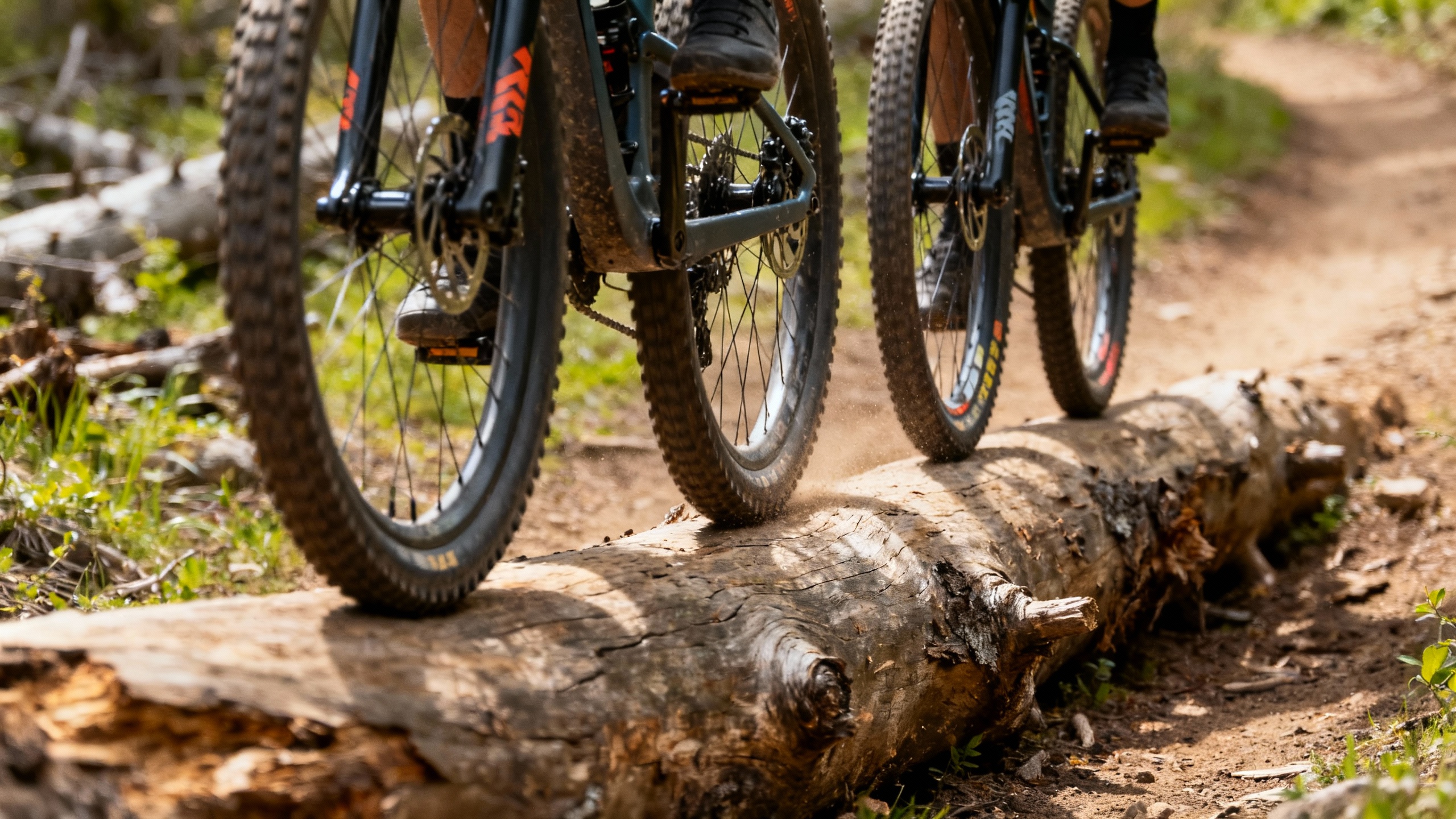
29-Inch Wheels: The Modern Standard
Twenty-nine-inch wheels have become the default choice for most mountain bike categories, and for good reasons backed by physics. The larger diameter rolls over obstacles more easily, maintains momentum better, and provides a larger contact patch for improved traction.
The right diameter wheel size for you largely depends on what you’re looking to get from a mountain bike and the type of terrain you like to ride. For taller riders and those tackling rougher terrain, 29ers provide noticeable advantages in stability and rolling efficiency.
The trade-off comes in maneuverability and acceleration. Twenty-nine-inch wheels take slightly more effort to get spinning and can feel less playful in tight, twisty singletrack. Shorter riders may also find the proportions awkward, particularly on smaller frame sizes where the large wheels can compromise standover clearance and handling.
27.5-Inch Wheels: Agile and Playful
Also called 650b, twenty-seven-point-five-inch wheels sit between the traditional 26-inch (now largely obsolete) and modern 29-inch standards. They accelerate more quickly than 29ers, feel more maneuverable in tight terrain, and work better for shorter riders where 29-inch wheels might create handling compromises.
Many riders find 27.5″ wheels more intuitive and fun, particularly on jump-focused trails or in bike parks where agility matters more than rolling efficiency. However, these wheels have lost market share to both 29ers and mixed-wheel setups in recent years.
Mixed Wheel (Mullet) Bikes: Best of Both Worlds?
Mixed-wheel or “mullet” setups pair a 29-inch front wheel with a 27.5-inch rear, attempting to combine the rollover and traction benefits up front with the agility advantages in back. This configuration has gained serious traction in enduro and downhill categories.
The larger front wheel provides stability and obstacle clearance where you need it most—leading into rough terrain. The smaller rear wheel quickens handling, reduces weight, and allows more aggressive geometry without compromising standover clearance.
Frame Material Showdown: Aluminum, Carbon, or Steel?
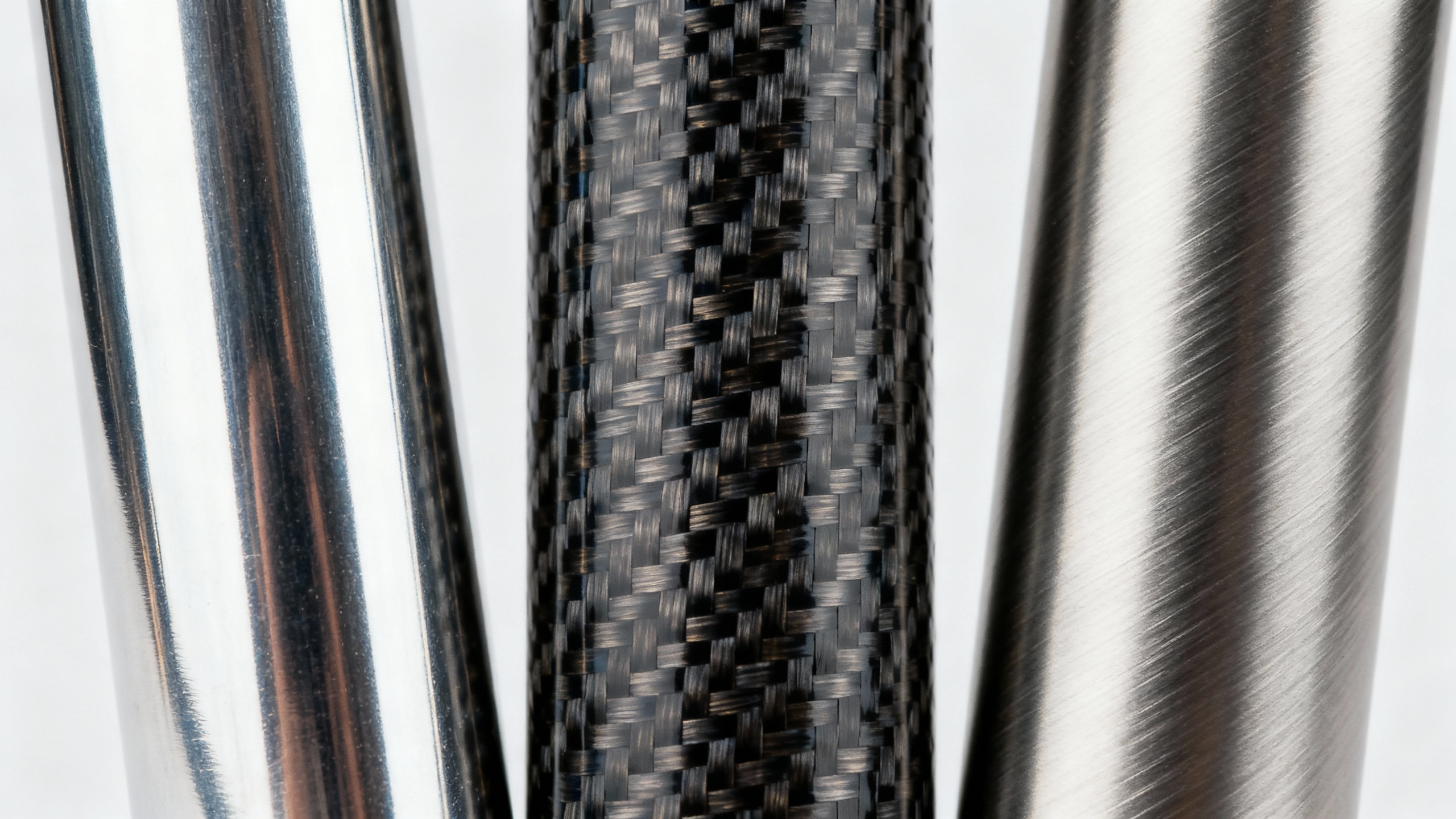
Frame material significantly impacts ride quality, durability, weight, and price. Understanding the real-world differences helps you make an informed decision beyond marketing hype.
Aluminum: The Workhorse Material
Aluminium is the material used for the majority of cheaper bike frames but it’s still a popular choice for some pricier, performance-focused frames. Modern aluminum frames use sophisticated tube shaping and welding techniques that produce surprisingly light, stiff, and capable bikes.
The Aluminum Advantages:
Aluminum offers an unbeatable strength-to-cost ratio. If you’re on a budget or just starting out in the sport, aluminum-framed mountain bikes are often very wallet-friendly. You can get a well-specced aluminum bike for hundreds or thousands less than its carbon equivalent.
The material is tough and resilient to impacts. While aluminum frames can fatigue over time, they’re less likely to suffer catastrophic failures from rock strikes or crashes compared to carbon. This durability makes aluminum ideal for aggressive riders, beginners learning bike control, or anyone riding particularly rocky terrain.
The Trade-Offs:
Aluminum is a stiffer material and transfers much more of the trail, including rocks and roots, into your hands and behind. Over long rides on rough terrain, this can lead to more rider fatigue. Modern frames mitigate this somewhat through clever tube shaping and compliance zones, but the material properties remain.
Aluminum frames are generally heavier than equivalent carbon frames, though the gap has narrowed considerably. For recreational riders, the weight difference rarely matters as much as marketing suggests—fitness and skills development provide far greater performance gains than shaving a few hundred grams from your frame.
Carbon Fiber: The Premium Choice
Few materials can come close to carbon fiber’s strength-to-weight ratio. Using high-modulus carbon and clever engineering, designers can produce frames that are both incredibly light and impressively stiff in the right directions while building in compliance where it enhances ride quality.
Why Riders Choose Carbon:
Weight is the obvious headline advantage. Many major manufacturers now produce carbon bikes that weigh less than 15 pounds complete, with cross-country mountain bikes weighing in around 20 pounds. For competitive riders or those tackling serious climbing, this matters.
More subtly, carbon’s vibration-damping properties create a noticeably different ride feel. The dampening effect of carbon will take some of the harshness out of the ride by soaking up some of the chatter you get when riding a rough trail. Over hours in the saddle, this reduces fatigue and improves comfort.
The Concerns:
Cost remains carbon’s biggest barrier. Expect to pay 30-50% more for a carbon frame compared to aluminum with similar components. For many riders, that premium is better invested in suspension upgrades, better tires, or a dropper post.
Carbon fiber is incredibly strong when engineered correctly. However, it can be vulnerable to impact damage. A hard hit on a carbon frame can lead to hidden internal fractures, potentially compromising its structural integrity. While modern carbon frames are remarkably durable, they require more careful inspection after crashes.
Steel and Titanium: The Niche Options
Steel frames offer legendary durability, excellent ride quality, and relative ease of repair, making them popular with touring riders and those seeking bombproof reliability. However, weight disadvantages and limited availability in modern mountain bike designs have marginalized steel to boutique builders and specific applications.
Titanium combines light weight with exceptional durability and corrosion resistance, creating frames that can last decades. The material’s compliance also provides an excellent ride feel. Unfortunately, titanium frames command premium prices, typically exceeding even high-end carbon options.
Suspension Deep Dive: Travel, Technology, and Tuning
Understanding suspension fundamentals helps you choose appropriate travel amounts and appreciate the technology differences that affect ride quality and performance.
How Much Travel Do You Actually Need?
Those who frequently tackle rugged terrains tend to prefer forks with greater travel—typically in the range of 120mm to 160mm—allowing for better absorption of shocks and bumps. Conversely, cross-country riders often opt for shorter travel forks, focusing on efficiency and speed.
The relationship between suspension travel and performance isn’t linear. More travel doesn’t automatically mean better performance—it means different performance characteristics suited to specific terrain and riding styles.
For cross-country racing and smoother trails: 80-120mm provides adequate small-bump sensitivity while minimizing weight and maintaining pedaling efficiency.
For trail riding and all-mountain adventures: 130-150mm handles most terrain admirably. This range provides enough capability for technical sections without excessive weight or pedaling compromise.
For enduro and aggressive trail riding: 150-170mm gives confidence on steep, rough descents while remaining manageable on climbs.
For downhill and bike park: 180-200mm+ prioritizes maximum control on the roughest terrain where climbs aren’t a consideration.
Air vs Coil Springs: Understanding the Difference
Modern suspension forks and shocks use either air springs or coil springs, each offering distinct characteristics.
Air suspension dominates the market because it’s lighter, easily adjustable (just add or remove air pressure), and can be tuned across a wide range of rider weights without changing physical parts. Air springs work well for most riders and provide excellent small-bump sensitivity when properly set up.
Coil springs are making a comeback, particularly on rear shocks for enduro and downhill applications. They offer more consistent performance through the travel, better bottom-out resistance, and a plusher feel in certain situations. The trade-offs are additional weight and less adjustability—you need to physically change springs to accommodate different rider weights.
Suspension Setup: It’s Critical
Many riders never properly set up their suspension, leaving massive performance gains on the table. At minimum, you should set appropriate sag (how much the suspension compresses under your weight), adjust rebound damping (how quickly the suspension extends after compression), and dial in compression damping if your fork and shock offer that adjustment.
The mountain bike suspension market was valued at approximately $2.64 billion in 2024, with projections estimating it will reach $5.23 billion by 2033, driven partly by increasingly sophisticated suspension systems that reward proper setup.
Most bike shops offer suspension setup services, or you can learn the process yourself through manufacturer resources and online tutorials. Proper setup makes a dramatic difference in how your bike performs—often more than buying more expensive components.
Component Considerations: Where to Spend and Where to Save
Smart component choices help you maximize performance within your budget.
Drivetrain: 1x vs 2x
Many mountain bikes come with a single chainring in the front and a wide-range cassette in the rear containing anywhere from 8 to 12 cogs. This kind of single-chainring setup is called a “one-by”. The 1x (one-by) drivetrain has become the mountain bike standard for good reasons: simplicity, lighter weight, better chain retention, and less chain drop.
Modern wide-range cassettes (typically 10-50 or 10-52 tooth ranges) provide enough gearing for most terrain. The convenience of operating a single shifter and eliminating front derailleur complexity outweighs the slight gear-range advantage of 2x systems for most riders.
However, 2x drivetrains still make sense for riders tackling extreme elevation changes or those prioritizing pedaling efficiency on varied terrain.
Brakes: Don’t Skimp Here
Quality hydraulic disc brakes are non-negotiable for mountain biking. Even budget bikes now include hydraulic discs, offering dramatically better power and modulation than mechanical systems.
For trail riding and beyond, four-piston brakes provide noticeably more power and better heat dissipation than two-piston designs. The weight penalty is minimal, and the confidence boost is substantial on steep, technical descents.
Dropper Posts: The Game-Changing Upgrade
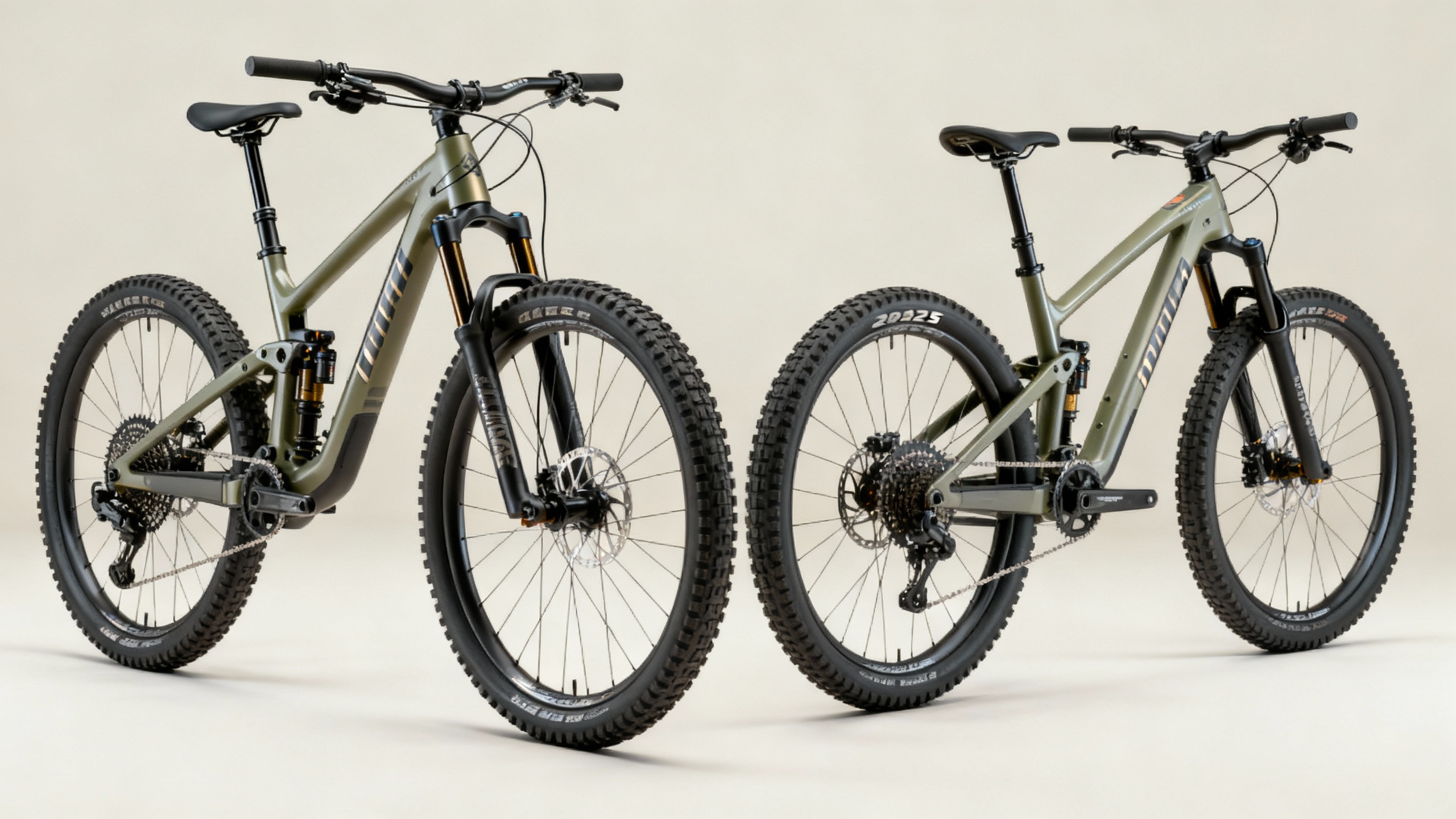
If your budget bike doesn’t include a dropper seatpost, make it your first upgrade. Being able to instantly lower your saddle for descents and raise it for climbs transforms bike handling and increases confidence dramatically. Modern internal-routing droppers work reliably and are worth prioritizing over flashier upgrades.
Sizing and Fit: Getting the Geometry Right
The best mountain bike is the one that fits you correctly, so while the type of bike you buy is important, it is also crucial to remember that a poorly fitting bike can transform your dream bike into an unfortunate investment.
Mountain bike sizing has become more nuanced as geometry has evolved. Many riders now prefer larger frames than traditional sizing charts might suggest, taking advantage of longer cockpits and shorter stems that provide more stability without compromising maneuverability.
However, sizing remains highly personal. Factors like inseam length, flexibility, prior injuries, and riding style can all influence your fit. When possible, test ride both your expected size and one size larger or smaller to feel the differences.
Key Geometry Numbers to Understand
Reach: The horizontal distance from the bottom bracket to the head tube. Longer reach creates more stable handling and requires less forward weight shifting on descents.
Stack: The vertical distance from bottom bracket to head tube. Higher stack provides a more upright position, reducing strain on back and shoulders.
Head angle: Slacker (smaller number) angles provide more stability at speed and on steep terrain. Steeper angles make the bike feel more nimble and responsive.
Seat angle: Steeper seat angles position you more forward on the bike, improving climbing efficiency and weight distribution.
Don’t obsess over geometry numbers to the point of paralysis, but understanding these basics helps you communicate with bike shop staff and make informed decisions when sizing is between two options.
Budget Strategy: How to Maximize Value
Mountain bikes span an enormous price range, from $500 entry-level hardtails to $15,000+ boutique dream machines. Smart shopping strategy helps you find the sweet spot for your needs.
The Budget Tiers
$500-$1,000: Entry-level hardtails with basic components. These bikes work fine for easy trails and learning basics, but limitations become obvious quickly. Consider buying used in this price range to access better-quality components.
$1,500-$2,500: If you can narrow down the type of riding you are into and how certain you are about giving mountain biking a serious go, you should be looking to spend anywhere from $1,500 to $4,000 for a bike worth keeping around. This range represents the sweet spot for hardtails or entry-level full-suspension bikes with quality components that won’t leave you immediately wanting upgrades.
$2,500-$4,000: Solid full-suspension trail bikes with reliable components. Bikes in this range handle demanding terrain confidently and provide room to grow as your skills develop.
$4,000+: High-performance machines with premium components, refined suspension, and lighter frames. The performance gains become increasingly incremental above this price point.
New vs Used Considerations
Going the used route is an excellent option if you want to make your dollar stretch. Most bikes have been secondhand, and you can often save thousands of dollars if you don’t mind a secondhand ride.
When buying used, inspect the frame carefully for cracks (especially around welds and pivot points), check suspension function, assess drivetrain wear, and verify brake performance. Factor replacement costs for worn components into your decision.
Where to Spend and Where to Save
Frame quality and suspension performance should be your priorities—these are expensive to upgrade later and fundamentally affect ride quality. You can always upgrade contact points (grips, saddle, pedals), wheels, and drivetrain components down the road.
Accept slightly lower-end shifters or brakes on your initial purchase if it means getting better suspension or frame quality. These components are easier and less expensive to upgrade later.
Putting It All Together: Your Action Plan
By now, you should have a clearer picture of what mountain bike categories, features, and specifications align with your riding goals. Here’s how to move forward:
Step 1: Honestly assess your riding terrain and style. What trails will you actually ride 80% of the time? Choose a bike category that handles those trails confidently.
Step 2: Establish your realistic budget, remembering to reserve funds for essential accessories: helmet, gloves, shoes, and ideally a dropper post if your chosen bike doesn’t include one.
Step 3: Decide hardtail or full suspension based on budget, terrain, and whether you prioritize learning fundamentals or maximum capability.
Step 4: Research 3-5 specific models that fit your criteria. Read professional reviews, watch video reviews, and check owner feedback forums for real-world experiences.
Step 5: Test ride your top choices. Geometry numbers and specifications only tell part of the story—you need to feel how the bike rides. Many shops offer demo programs or rental fleets that let you try bikes on actual trails.
Step 6: Don’t obsess over having the “perfect” bike from day one. As your skills develop and you discover your preferred riding style, your ideal bike might change. Your first mountain bike is an entry point, not a lifetime commitment.
Frequently Asked Questions
Q: How do I choose a mountain bike that’s right for my riding style?
Choosing the right mountain bike starts with honest assessment of where you’ll actually ride. If you’re new to the sport of mountain biking, visit your local bike shop to test different bike types—from cross country bikes for smooth trails to versatile mountain bikes that handle varied terrain. The best bike matches your local trails and skill level, not what professional mountain bikers ride. Most shops can help you choose based on terrain type, budget, and whether you want a full suspension bike or hardtail.
Q: Should I buy a new mountain bike or consider a used bike?
Both options work well depending on your situation. Buying a mountain bike new gives you warranty protection and the latest technology, with many bike offers available during end-of-season sales. However, a quality used bike can save you 30-50% while providing excellent performance. When getting a bike secondhand, have your local bike shop inspect the mountain bike frame, suspension components, and drivetrain wear before your bike purchase. Used enduro mountain bikes and full suspension models often represent exceptional value.
Q: What’s the difference between a cross country bike and other mountain bike styles?
Cross country bikes are built for speed and efficiency with 80-120mm travel, making them the lightest option but less capable on rough descents. Trail bikes offer 120-160mm travel for versatility, while enduro mountain bikes feature 160-180mm for aggressive terrain. Each bike type serves different purposes—versatile mountain bikes like trail models work best for riders wanting one bike that handles everything. When you ride a bike designed for your terrain, the experience improves dramatically compared to the wrong bike type.
Q: How important is getting a bike that fits properly?
Finding a bike that fits correctly is absolutely critical—more important than brand or components. An ill-fitting mountain bike frame causes discomfort, reduces control, and can lead to injury. When buying a mountain bike, spend time at your local bike shop getting properly sized. Most bikes are built around reach and stack measurements, and what works for one mountain biker might not suit another. Professional fitting ensures your new bike feels comfortable from your first ride and helps you choose the right mountain bike for your body proportions.
Q: Can a mountain bike work as my only bike, or should I also have a road bike?
Many riders find versatile mountain bikes serve as their only bike, especially if local trails dominate their riding. However, if you split time between pavement and dirt, consider how much road riding you actually do. A mountain bike is right for primarily off-road adventures, but bikes tend to feel sluggish on long road rides. Some riders maintain both a mountain bike and road bike, while others find a single versatile mountain bike or even a gravel bike meets all their needs. This buyer’s guide can’t make that decision—only you can based on where you’ll ride most.
Q: What should I look for when I visit a local bike shop for my first bike?
A good bike shop will help you choose the right mountain bike through questions about terrain, budget, and goals rather than pushing the most expensive option. They should let you test ride multiple bike types to find what feels best. Ask about their service packages, as ongoing maintenance support adds tremendous value to your bike purchase. The shop should explain different mountain bike styles, help you understand whether you need a full suspension bike or hardtail, and ensure you find a bike that works for your riding. This buyer’s guide provides background knowledge, but experienced staff can apply these principles to your specific situation and help you choose based on what bikes they actually stock.